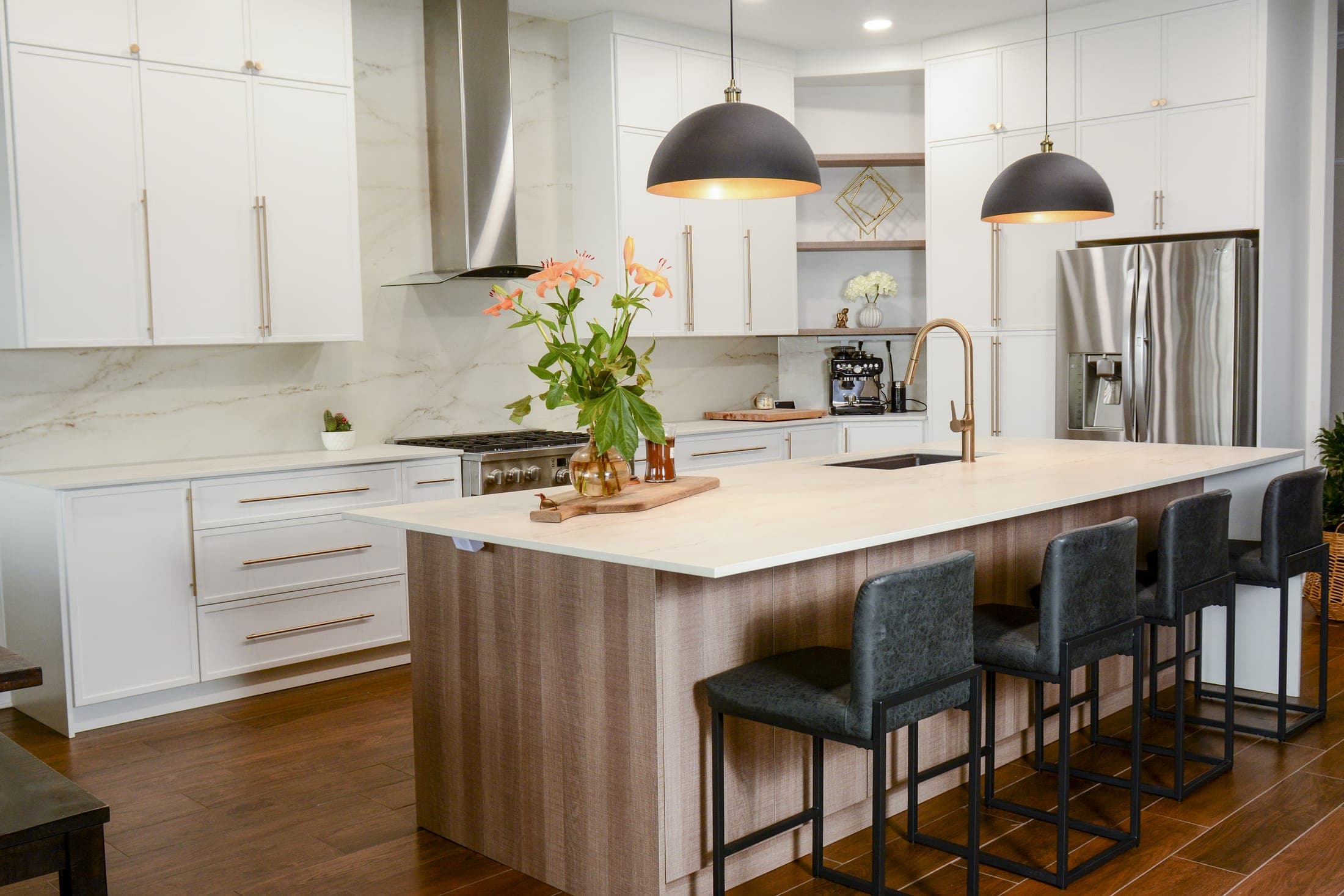
The question usually lands about twenty minutes after the estimate does, and it rarely comes from the person who called us. It comes from the one who stayed quiet the whole time: how much of this do we get back if we sell?
Here's the part nobody wants to lead with: no one can hand you a percentage for your house. What you recover depends on your street, your floor plan and who's shopping the month you list, and anybody quoting a flat figure for an Orlando kitchen is reading a national average out loud. What we can tell you is which line items a buyer reacts to and which ones are yours alone — and that depends on which of two projects you're in.
Remodeling to sell and remodeling to live are different jobs
If the house goes on the market inside the next year, the kitchen has one job: give the buyer nothing to haggle with. The buyer walks in, reads the room as done, and keeps moving toward the bedrooms. You aren't paying for your mornings at that counter, you're paying to delete an objection — and that costs a lot less than people assume.
If you're staying five, ten, twenty years, the math flips. Almost everything you get back, you get back by using it: the drawer that doesn't fight you, the pull-out trash where the trash actually belongs, the two feet of counter to the right of the range where the hot pan lands. Resale value is a side effect — a plywood box and a good undermount slide are still a plywood box and a good slide the day you hand over the keys — but that isn't what you're buying, and on that horizon the next question is usually whether the rest of the house gets done now or in stages.
The expensive place to stand is the middle: three years, maybe four. People build the forever kitchen, enjoy two Christmases in it and sell before daily use has paid back the difference. If you can't tell which one you're in, try a smaller question: name one drawer in this kitchen you'd want built to your own measurements. If nothing comes to mind, you're remodeling to sell.
What a buyer is actually paying for
- A layout that makes sense. If the fridge sits where you have to walk around the island to put the milk away, every visitor feels it in ten seconds. Fixing a bad plan is the structural expense that tends to hold its value best, and the reason a serious kitchen remodel starts with the floor plan, not the door catalog.
- Doors get photographed. Boxes are what fails. Plywood under the sink and plywood carrying the countertop, doubly so in Florida, and what a cabinet quote covers and what it quietly leaves out is where that difference hides. The buyer's inspector puts a flashlight on the cabinet floor under the drain before he looks at anything else, and particleboard that has ever been damp gives itself away: a swollen seam at the back corner, a rust ring around the screw heads, shelf pins sitting a little too deep. That goes in the report the buyer's agent reads out loud with you standing there, and none of it shows in a listing photo.
- Drawers where the lower doors used to be, on full-extension undermount slides. A cheap slide under a deep drawer full of cast iron sags and then drags on the frame every time. Whoever opens it knows something was done on the cheap.
- Light is the cheapest thing on this list. LED under the uppers, a dimmer, and no pantry tower planted in front of the only window — it shows up in every listing photo.
- Ventilation that actually leaves the house. Sealed house, air conditioning year round, recirculating hood: the grease just gets redistributed. You smell last night's fish at the front door. So does the buyer.
The part nobody will pay you for
The colored lacquer. The pot filler over the range. Counters at thirty-nine inches because you're six foot four. Do it if that's what you want; just don't file it under investment. The clearest case is storage built around one habit: the spice drawer sized to your jars, the pull-out tray for that one mixer. Changes your day, worth zero to the next owner.
Who is shopping for a kitchen in Central Florida
The street sets the ceiling. Push a kitchen far past what the rest of the block supports and the extra money is a gift to whoever buys the house. And that ceiling moves inside half an hour of driving.
At the price a house commands in Dr. Phillips or Windermere, a finished kitchen isn't an upgrade, it's the entry ticket: stone, soft-close, a panel on the fridge. Nobody credits you for it; they notice when it's missing. The same package in a three-bedroom in Kissimmee sits above what that block carries, and what you recover is the first half of the work: sound boxes, drawers, counter, light.
Plenty of buyers here aren't moving in at all. Second homes, the ones who land in November and leave in April, the short-term rental corridor out by Celebration and Kissimmee. That buyer isn't picturing Sunday breakfast, they're counting what breaks. Their first question isn't what it looks like, it's how long a finish holds up with a stranger using it. Right question.
Spend there like a landlord, not like a homeowner.
The new houses south and east of town — Lake Nona, Laureate Park, the recent stretches of Hunters Creek — often start from a builder-grade package: thermofoil or laminate fronts, particleboard boxes, a pantry on wire shelving. Worth checking what yours got, because that starting point is good news: the buyer is comparing your kitchen to the builder kitchen two doors down.
Humidity and the air conditioning. The daily swing between muggy outside and conditioned inside is what moves a door and swells a damp box, and how a cabinet box holds up to Florida humidity is worth reading before you sign off on a spec.
One more, and it bites at the worst moment: permits. Moving plumbing, gas or circuits is permitted, inspected work in Central Florida, and the specifics depend on your jurisdiction — Orange County, Osceola, your own city. Unpermitted work surfaces during the sale, and unwinding it costs more than doing it right.
What ages well
Simple door profiles — shaker, slab — still look current decades later, which is why they're everywhere. A calm quartz outlasts the dramatic slab everybody wants photographed. What dates fast is anything tied to a specific year: the glossy color of the season, the mosaic that will carbon-date the remodel.
"And if I sell in a year?"
Then the math changes. If the listing photos go up in eleven months, sound cabinets with new doors and drawer fronts, a good counter, lighting, paint and hardware read as done to every buyer who walks through. Custom is for whoever will open those drawers ten thousand times; where that line falls exactly is what we get into in custom versus stock cabinets.
Either way, the first thing to settle is which project you're in. That takes a tape measure and one honest conversation. When you're ready, tell us what you've got — the first consultation doesn't cost anything.