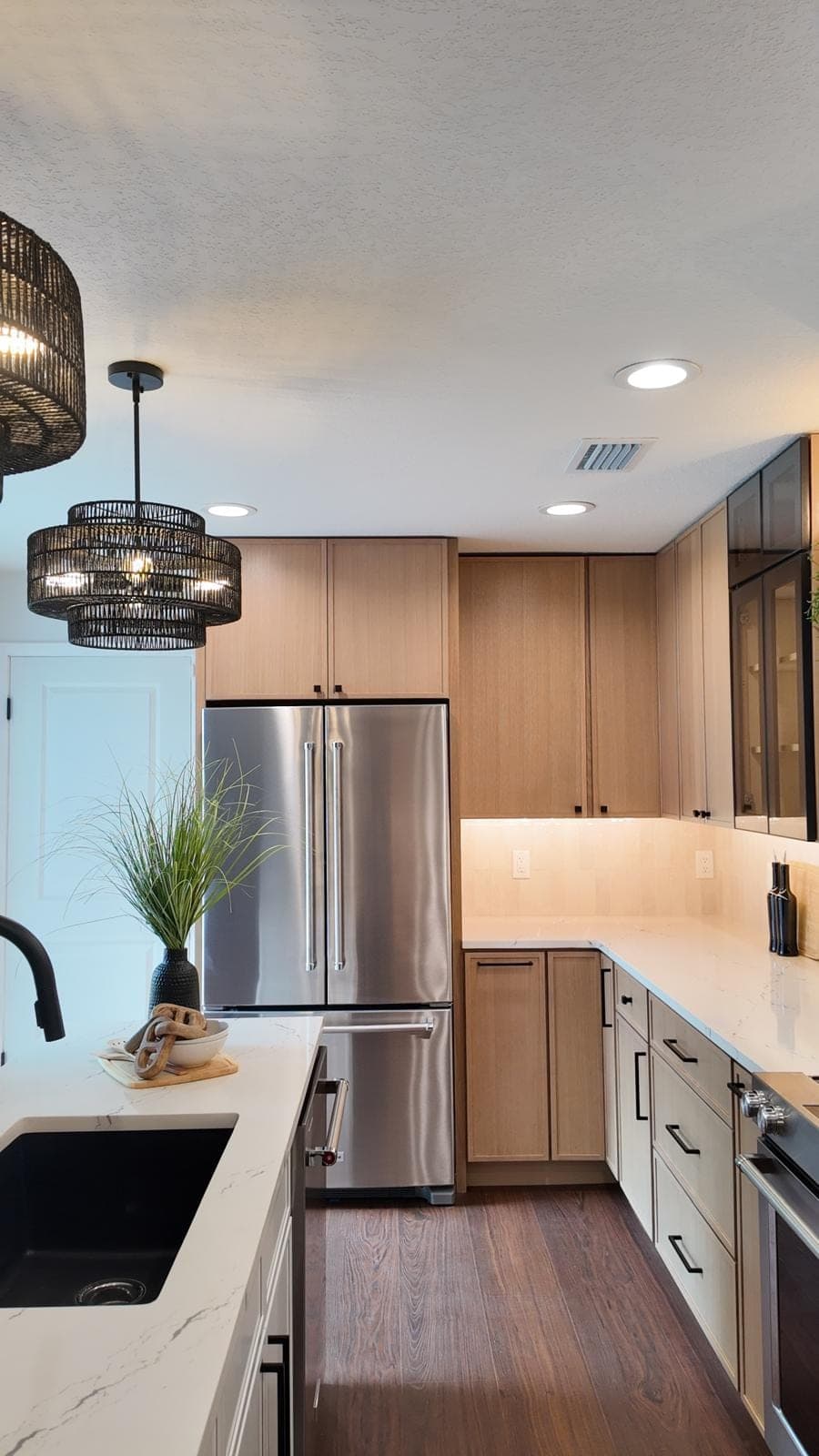
Choosing a cabinet finish is exciting. Deciding where the blender, baking sheets and lunch containers will live is less glamorous, but it shapes how the kitchen feels every day. Before you finalize new cabinetry for your Orlando home, give the inside of each cabinet a job.
The goal is not to fill every opening with an organizer. It is to make frequently used items easy to find and return, while keeping occasional equipment from occupying the most useful spaces.
Take an inventory that reflects your real routine
Open your current cabinets and photograph the contents before rearranging them. Note what lives on the counter because it has no convenient home. Separate the items you use daily, weekly and only for special occasions. Then measure the largest pieces you plan to keep.
- Cookware with its handles and lids, including the pot you use most.
- Small appliances with their accessories and removable containers.
- Serving platters, trays and cutting boards that need unusual clearance.
- Food storage containers with a realistic place for matching lids.
- Pantry purchases in the sizes you actually buy.
This exercise can reveal that you need more space for tall bottles rather than another shallow utensil drawer. It can also show which items should move outside the main cooking area.
Assign storage to a task
Walk through making your most common meal. Where do you reach for a knife, a mixing bowl and a pan? Next, walk through putting away clean dishes. Write the intended contents on the cabinet plan so that storage decisions can be reviewed alongside the appliance layout.
A breakfast station might group mugs, coffee supplies and cereal near the point where your morning starts. A baking area might keep measuring tools and mixing bowls together. These are planning examples, not a fixed formula: the arrangement should follow your habits.
Compare drawers by usable space and access
Ask to see the proposed drawer hardware in use. For example, Blum describes TANDEMBOX drawers as full extension, allowing access to items at the back. The important buying question is which hardware your own cabinet proposal includes.
Request interior dimensions, not just the width of the cabinet front. Dividers, drawer sides and the selected hardware affect what fits. Bring the tall container or wide skillet that matters to you, and ask the designer to show its intended position.
Make a deliberate plan for corners and small appliances
A corner solution is only helpful if you can reach, remove and replace the items you store there. Compare the actual opening and usable compartments. Sometimes storing occasional serving pieces there makes more sense than treating the corner as the main home for everyday cookware.
For appliances, distinguish between storage and operation. A cabinet can hold an appliance without being suitable for running it inside. Any plan to use equipment in an enclosed space needs to follow that appliance's ventilation, clearance and electrical instructions.
Review the cabinet plan with five questions
- Does every daily item have a convenient home?
- Can drawers and neighboring appliance doors open without conflict?
- Do tall and wide items fit the actual interior dimensions?
- Are the organizers included in the quote or separate selections?
- Can the arrangement adapt if your shopping or cooking habits change?
Keep a copy of the labeled plan with your selections. It provides a useful reference when comparing proposals and checking the finished cabinetry.
Explore CI2V's custom cabinetry and design service or read our guide to custom versus stock cabinets. If you are ready to plan storage around your household, request a free consultation in Orlando.